
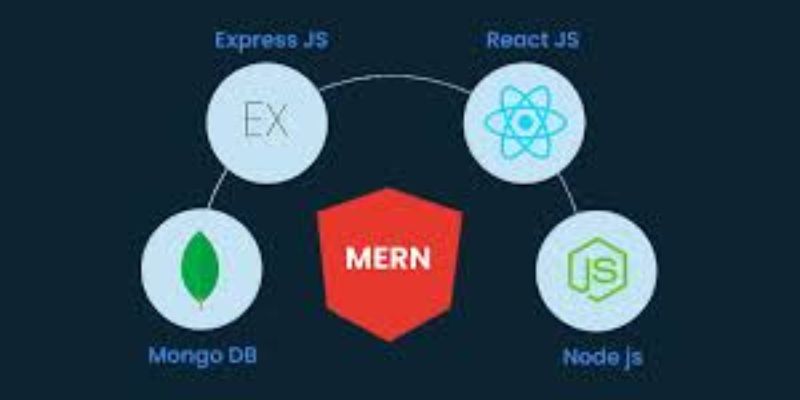
One of the most often used technological combinations for contemporary web development is the MERN stack. It enables programmers to use JavaScript to create whole online applications, from the front end to the back end. The acronym for MongoDB, Express.js, React, and Node.js is MERN. When combined, these technologies aid in the development of interactive, scalable, and quick applications that may meet practical business needs. The MERN stack simplifies development and eliminates the need to learn different programming languages, which is why many startups and large businesses pick it.
Understanding how various technologies interact may first appear intimidating to novices. However, the MERN stack is much simpler to comprehend when it is reduced to basic ideas. Each element has a distinct purpose, and when combined, they create a whole development ecosystem. FITA Academy supports learners in developing MongoDB database management, Express.js framework usage, React.js frontend development, Node.js backend programming, API integration, and full-stack web application development skills. Gaining knowledge of the MERN stack will enable ambitious developers confidently create useful apps and open doors to intriguing job prospects.
What Is the MERN Stack and Why Is It Popular?
Developers may work on both the frontend and backend without changing programming languages because all four technologies use JavaScript. This uniformity makes project management easier and increases productivity. The MERN stack is perfect for startups, businesses, and independent developers since it facilitates quick development. Businesses utilize MERN to build business portals, social networking apps, e-commerce platforms, and content management systems. Its robust community support, which offers an abundance of educational materials, libraries, and tools, is another factor contributing to its popularity.
Understanding MongoDB: The Database Layer
The database part of the MERN stack is called MongoDB. MongoDB use flexible documents stored in collections, as contrast to conventional relational databases that store data in tables. Managing massive volumes of data and adjusting to evolving application needs is made simpler by this framework. For instance, an online retailer can use MongoDB to store order history, product data, and customer information. Because MongoDB manages complicated data structures effectively and expands readily as applications expand, developers value it. MERN Stack Course in Chennai offering practical, industry-focused guidance in full-stack web development, React.js, Node.js, Express.js, and MongoDB technologies. It integrates seamlessly with other MERN technologies since it saves data in a manner akin to JavaScript objects.
Understanding Express.js: The Backend Framework
Express.js is a Node.js-based lightweight web application framework. By offering tools for managing routes, processing requests, and creating APIs, it streamlines backend development. To put it simply, Express serves as a conduit between the database and the frontend. Express handles requests from people interacting with a website and decides how the application should react. When a user submits a login form, for instance, Express gets the request, checks the credentials, and responds appropriately. Express is preferred among developers due to its speed, flexibility, and ease of learning. Developers may concentrate on application logic as it removes a large portion of the repetitious code associated with backend development.
Understanding React: The Frontend Powerhouse
The frontend library used to create user interfaces in MERN apps is called React. React, created by Facebook, allows programmers to use reusable components to create responsive and interactive web pages. Consider React as the portion of the program that users directly view and interact with. For instance, React components are frequently used to create dashboards, product listings, forms, and navigation menus. B School in Chennai can significantly boost your career readiness and employability by enhancing your MERN Stack development. React’s ability to change certain sections of a webpage without requiring a page reload is one of its best features.
Understanding Node.js: The Server Environment
The runtime environment that enables server-side JavaScript execution is called Node.js. JavaScript was formerly restricted to web browsers, but Node.js allowed it to be used for backend development. Node.js manages communication between the frontend and database and runs server-side code in a MERN application. It is renowned for its speed and event-driven architecture, which enables it to handle several requests at once. For instance, Node.js can effectively manage user interactions on a social media platform with thousands of active users. Developers like Node.js because it makes full-stack JavaScript development possible and gives them access to a large ecosystem of packages through npm.
How the MERN Components Work Together
Analyzing the interactions between the four technologies is one of the simplest methods to comprehend the MERN stack. Consider a consumer using an online shopping website to place a purchase. The user inputs order data while interacting with a React-based UI. These are the uses of MERN stack. This data is sent by React to a Node.js-based Express.js API. After processing the request, the backend saves the order details in MongoDB. The procedure is reversed when the user wishes to examine their order history. The data is retrieved by MongoDB, processed by Express, and then shown on the screen using React.
Common Challenges and Best Practices for MERN Developers
Learning the MERN stack can be difficult for beginners, particularly when attempting to comprehend how several technologies work together. Managing project structure, managing API connectivity, diagnosing issues, and properly integrating databases are common challenges. Consistent practice and practical tasks are the greatest ways to overcome these obstacles. Before tackling more complicated tasks, start with simpler apps like task organizers, note-taking programs, or simple e-commerce websites. Maintainability is enhanced by grouping code into distinct folders for the frontend, backend, routes, controllers, and models. Collaboration and change tracking are facilitated by the use of version control systems like Git. Additionally, developers should concentrate on adhering to recognized coding standards and developing clear, reusable code. Gaining knowledge of testing methods and debugging tools enhances development efficiency even further.
Career Opportunities and Future Growth with MERN Stack Skills
As companies look for experts who can create whole web apps, the need for MERN stack engineers keeps rising. Frontend developer, backend developer, full-stack developer, software engineer, and web application developer are just a few of the professional options that MERN talents may lead to. Because MERN developers may utilize a single programming language to operate across many application layers, many companies like them. The ability to provide end-to-end development services is another advantage of MERN knowledge for freelancers. Beyond career prospects, MERN expertise offers a solid basis for understanding cutting-edge technologies like cloud computing, DevOps, and microservices architecture.
Conclusion
When each component is seen as a part of a bigger system, it becomes much easier to understand the MERN stack. React develops dynamic user interfaces, Node.js fuels server-side processes, Express.js handles backend requests, and MongoDB stores data. When combined, they provide a comprehensive platform for creating contemporary online applications. Beginners may progressively gain confidence in full-stack programming by studying how these technologies work together and working with real-world applications. One of the most useful skill sets for budding developers is the MERN stack because of its adaptability, scalability, and industry relevance. Learning the MERN stack may provide you a solid basis for success in today’s digital world, whether your objective is to create personal projects, land a development job, or establish a business.